
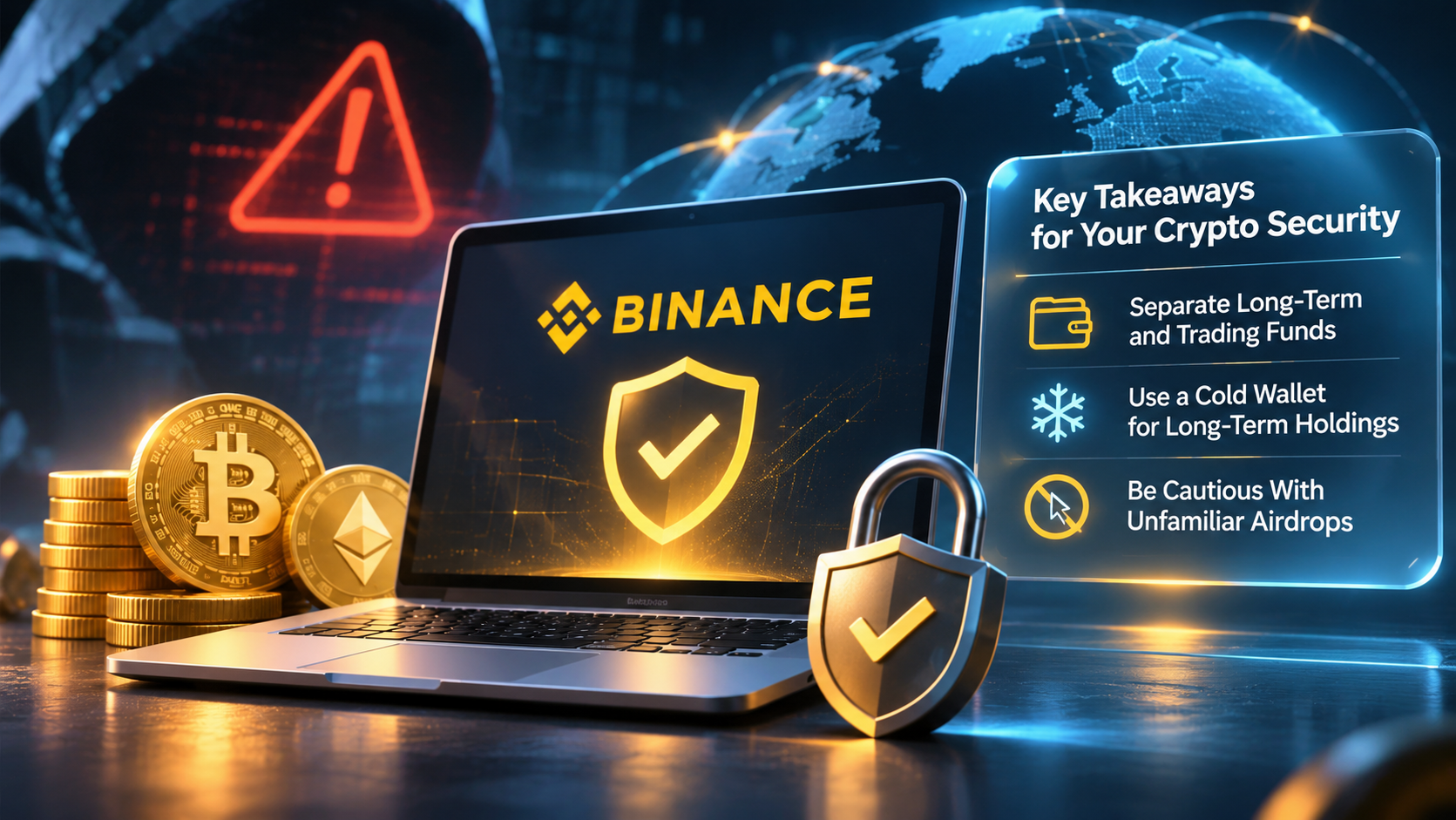
On October 29, Binance experienced one of the largest security breaches in cryptocurrency history, involving approximately $6.34 billion in digital assets. For an exchange operating on such a large scale, the incident naturally raised concerns about the safety of funds held on centralized platforms.
Several days have passed, and more information has emerged from Binance, the FBI, and independent media. While the scale of the attack is difficult to ignore, I find myself paying more attention to what happened afterward.
How quickly did the platform respond? What happened to users’ assets? And what can ordinary crypto users learn from an incident that was largely beyond their control?
I don’t think a single security incident is enough to determine whether an exchange is safe or unsafe. Cyberattacks can involve many different factors, some of which may take months to investigate. What matters is not only how an attack happened, but also how the platform responds, takes responsibility, and addresses the problems that allowed it to occur.
At the same time, there are security risks that we, as individual users, have much more control over. Understanding the difference between these two types of risk may be one of the most useful lessons from this event.
What Happened, and How Did Binance Respond?
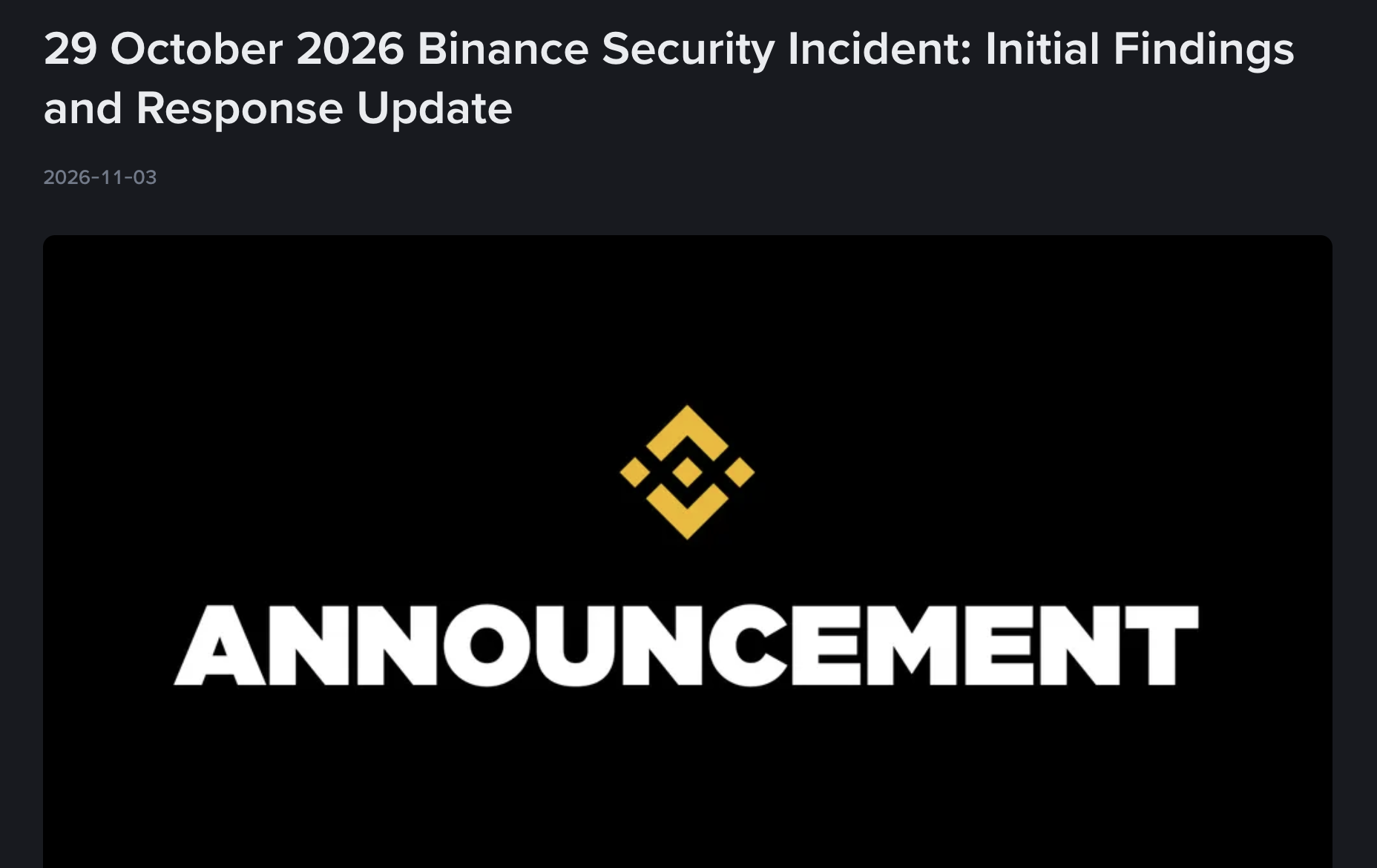
According to Binance’s preliminary investigation published on November 3 , the October 29 attack involved a sophisticated campaign combining social engineering, malicious software, compromised employee devices, and unauthorized access to internal wallet-signing systems.
The attackers were able to move assets from several hot wallets, including exploiting Ethereum’s EIP-7702 authorization mechanism to carry out additional unauthorized transactions.
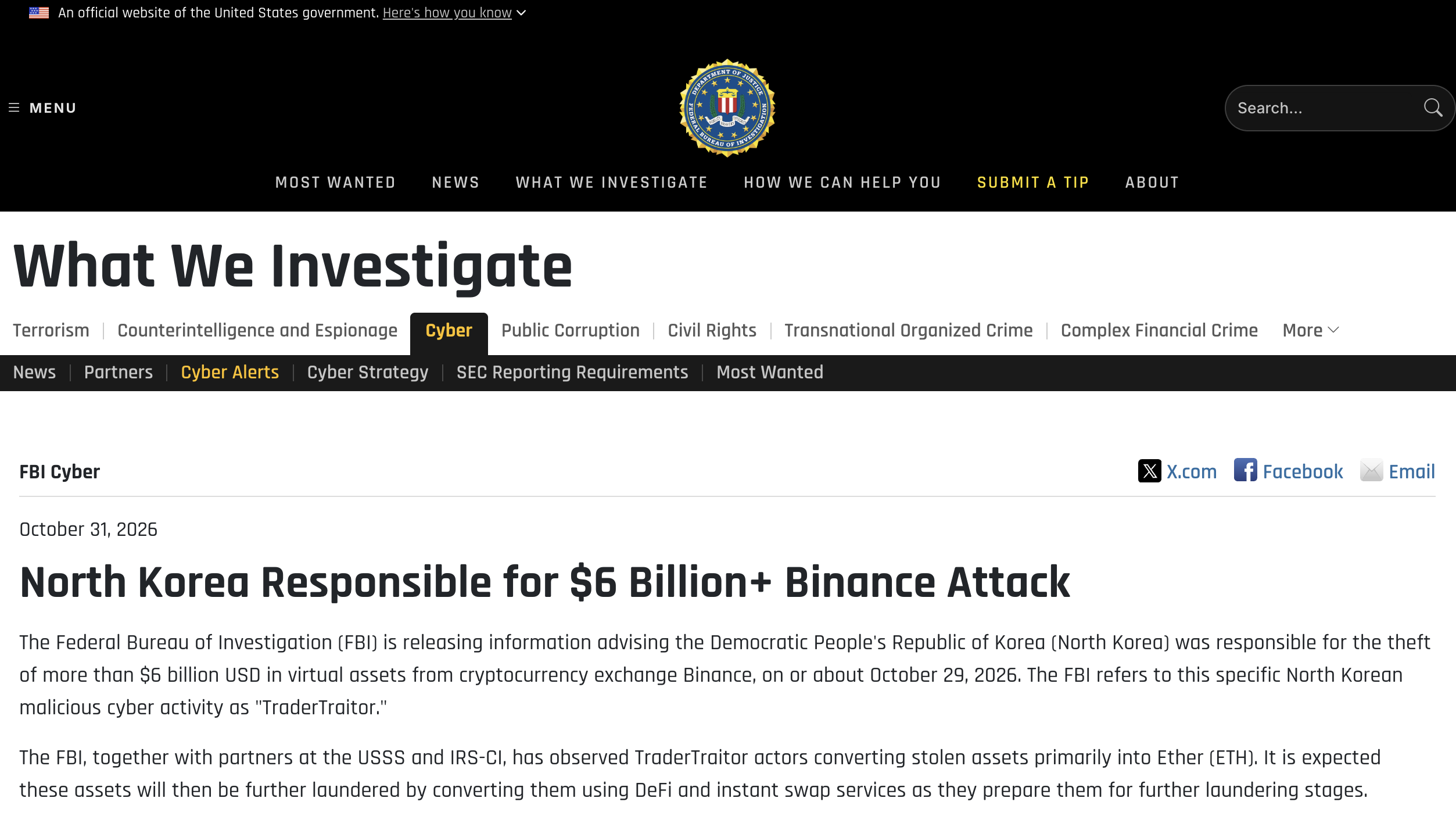
On October 31, the FBI attributed the theft to North Korea’s TraderTraitor cyber operation . Investigators reported that some stolen assets were being converted into Ether, with the possibility of further movement through decentralized financial services.
What followed was a series of responses from Binance.
The exchange temporarily suspended withdrawals, worked with law enforcement and blockchain partners to freeze affected assets, and committed to absorbing the financial losses rather than passing them on to users.
By November 3, Binance reported that approximately $2.85 billion in affected assets had been frozen or intercepted. In its November 4 recovery update , the exchange confirmed that about 98% of the affected token assets had been replenished, with the remaining assets still being purchased.
It is important to distinguish between frozen assets, recovered funds, and assets replaced using company reserves. They are not the same thing.
Binance also published updated Proof of Reserves information, expanding its latest snapshot from 10 to 44 tokens. The full cryptographic verification process for the new snapshot was still being completed at the time of the announcement.
Withdrawal services have been reopening in stages, with further assets scheduled for withdrawal restoration on November 5 .
The investigation is ongoing, but these updates give us a clearer understanding of how the exchange has handled the immediate consequences.
Why a Platform’s Response Matters
When a large exchange suffers a cyberattack, ordinary users have very little visibility into its internal systems. We don’t know how employees’ devices are managed, how wallet permissions are configured, or what vulnerabilities attackers might be trying to exploit.
Those are risks that individual customers cannot reasonably be expected to predict.
What users can observe, however, is the platform’s response once a problem becomes known.
In Binance’s case, the exchange took steps to contain the attack, committed financial resources to cover the affected assets, restored services progressively, and continued publishing recovery updates. Those actions are important because they address the questions users are most likely to have during a security incident: Is my money protected? Can I access it? And is the platform taking responsibility?
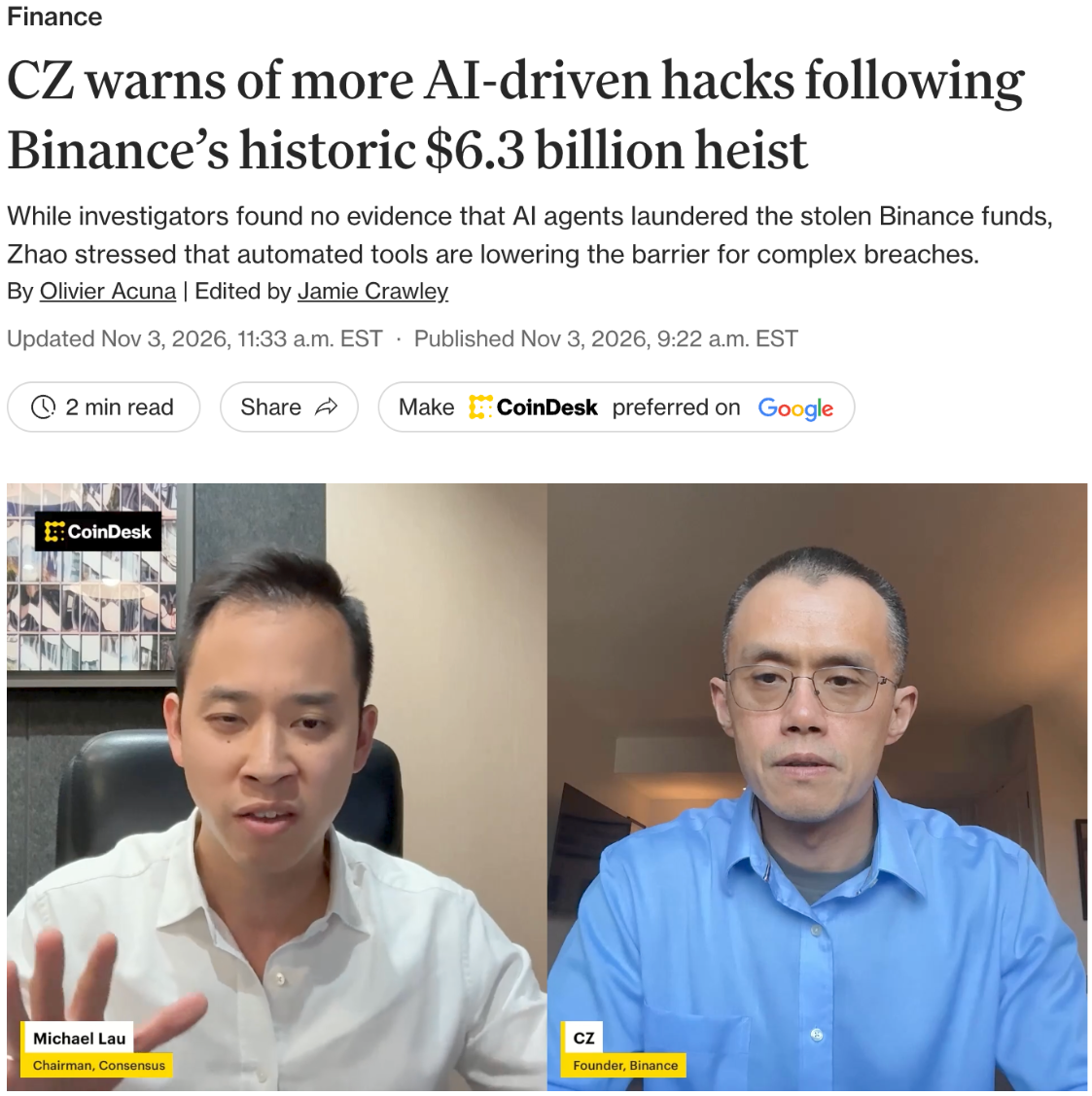
In a November 3 interview with CoinDesk , Binance founder Changpeng Zhao discussed the withdrawal activity following the incident. He pointed to the relatively limited initial outflows compared with the exchange’s overall asset holdings as an indication of continued user confidence.
Withdrawal figures alone cannot tell us exactly how much trust customers have in a platform. People may choose to keep funds on an exchange for many reasons, including trading needs and convenience. Still, the ability to restore services and demonstrate that the platform can meet its obligations is meaningful.
I also think Binance’s updated Proof of Reserves deserves attention. Giving users a way to independently check certain asset balances is more useful than simply asking them to trust a statement. Of course, Proof of Reserves has limitations and cannot, by itself, establish that every operational or financial risk has been addressed.
For me, recognizing the value of Binance’s response doesn’t mean overlooking the security weaknesses that still need investigation. Both can be true.
An exchange can respond responsibly to a serious incident while still having important work to do on its security systems.
No platform can guarantee that it will never experience an attack. What users should be able to expect is a serious response, clear communication, appropriate financial responsibility, and continued improvements.
The Risks We Cannot Predict, and the Risks We Can Avoid
This incident also made me think about an important distinction in personal asset security.
Some risks are largely outside our control. Others are closely connected to the decisions we make when using our wallets.
A sophisticated attack against an exchange’s internal infrastructure is an example of the first. Most users cannot anticipate it or personally prevent it, which is why platform security and incident response matter so much.
But there are also situations where our own judgment can make a difference.
One example is the unfamiliar airdropped tokens that sometimes appear in crypto wallets.
Anyone who has used a Web3 wallet for a while may have encountered this. A token suddenly appears, even though we never bought it or participated in the project. Sometimes the balance looks surprisingly large, or the wallet displays a value that makes it seem worth investigating.
It’s easy to become curious. Could these tokens actually be worth something? Can they be exchanged? Is there an unexpected opportunity here?
But this is exactly where we need to be careful.
Some unsolicited tokens are part of scams designed to lure users into visiting malicious websites, connecting their wallets, or approving transactions they don’t fully understand. Merely receiving such a token generally doesn’t compromise a wallet, but interacting with suspicious contracts or granting unnecessary permissions can put other assets at risk.
For an unfamiliar token that I never requested, I would rather ignore it or hide it than take that chance.
Sometimes, the simplest way to protect an account is not to interact with something just because it appears to be free.
This is a very different situation from the Binance attack. One involves a platform-level security incident that ordinary users could not reasonably foresee. The other involves potential risks that we can often reduce through our own decisions.
I think both deserve attention, but we shouldn’t confuse them.
Separating Long-Term Holdings From Everyday Transactions
There is another practical approach I find useful: keeping assets intended for long-term holding separate from the funds used for daily transactions.
For people holding a relatively large amount of cryptocurrency, cold storage may be worth considering for assets that don’t need to move frequently. When properly configured and used, a cold wallet can reduce exposure to certain remote attacks by keeping private keys offline.
For regular on-chain transactions, however, a smaller and separate hot wallet can be more practical.
Imagine someone holds $10,000 in crypto assets but usually needs only $100 when interacting with a DeFi application or making a token swap. There is little reason to connect a wallet containing the entire $10,000 to every new application.
Keeping long-term holdings in one wallet and using another wallet with a limited balance for everyday activity may help reduce the potential consequences of a malicious approval or compromised application.
Of course, the separation needs to be meaningful. Using multiple wallet addresses derived from the same recovery phrase may not protect those addresses if that phrase is compromised.
And cold wallets are not completely risk-free. Mistakes in backup procedures, malicious transaction approvals, and other operational errors can still lead to losses.
It’s also worth remembering that separating personal wallets doesn’t directly protect assets still held by a centralized exchange. Those funds remain subject to the exchange’s custody and operational risks.
I’m not suggesting that everyone needs to use exactly the same wallet setup. What works for someone holding a small amount of crypto may not be appropriate for someone managing much larger holdings.
The point is to understand how our assets are being used and whether we are exposing more of them than necessary.
Good asset management isn’t only about deciding what to buy or when to sell. It also includes deciding where to keep what we already own.
Security Is Part of an Industry’s Development
Every industry encounters challenges as it develops, and cryptocurrency is no exception.
The internet has experienced decades of viruses, data breaches, fraud, and attacks against financial institutions. These problems didn’t disappear as technology became more widely adopted. In many cases, the threats became more sophisticated, requiring companies and users to improve their security practices.
I think the crypto industry faces a similar challenge.
As digital assets become more widely used, security can no longer be treated as something separate from everyday operations. Exchanges need reliable infrastructure, clear procedures for handling incidents, and the financial and operational ability to respond when things go wrong.
Users, meanwhile, need a better understanding of the risks they can manage themselves.
That doesn’t mean we should accept major losses as a normal price of innovation. When a platform is responsible for holding customer assets, it has an obligation to take security seriously and address failures.
But I also don’t think a single incident should automatically erase everything a platform has built over the years. Its response, recovery process, transparency, and subsequent improvements all deserve to be considered.
In the case of Binance, the steps taken after the attack have been meaningful. Whether the longer-term security changes prove effective is something we will have to judge through future evidence.
Final Thoughts
What stands out to me about this incident is not only the scale of the theft, but the difference between the risks we depend on others to manage and those we can actively reduce ourselves.
When a platform is attacked, customers depend on its security systems, financial resources, and willingness to take responsibility. We cannot control every decision an exchange makes, but we can pay attention to how it responds when something goes wrong.
When it comes to our own wallets, we have more direct choices. We can separate long-term holdings from everyday trading funds, avoid unnecessary permissions, and resist the temptation to interact with unfamiliar tokens simply because they appear to offer something for free.
I remain interested in the future of blockchain technology, and I don’t think serious security incidents should prevent us from recognizing its potential. But being optimistic about an industry doesn’t require us to ignore its risks.
Some risks will remain beyond our control. Others can be reduced by understanding what we’re doing and knowing when it’s better not to act.
For ordinary users, that may be one of the most practical ways to approach crypto security.
Information updated November 5, 2026. This article is based on Binance’s official announcements, the FBI’s public statement, and independently reported information. The investigation and recovery process remain ongoing, and further updates may change the available details. This article is for general information and risk awareness only and does not constitute financial or investment advice.